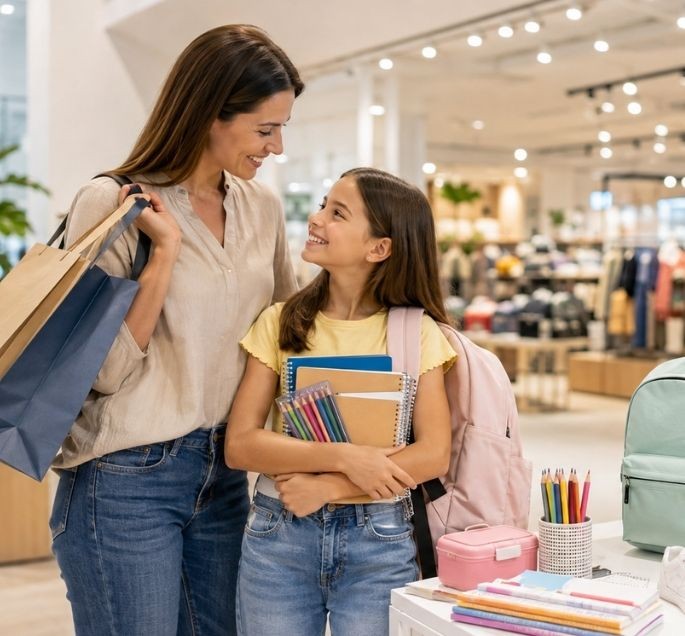
As the final days of summer holiday approach, one topic takes over every family's agenda: school shopping. From notebooks and pens to bags and shoes, from school clothes to lunch supplies, this shopping process can strain the budget and become a source of stress if approached without a plan. Moreover, each age group has different needs; there are significant differences between a child starting primary school and a high school student's list.
In this guide, we cover all the items on the school shopping list for the 2026-2027 academic year — from stationery to clothing, technology to nutrition — grade by grade. Our aim is to help parents manage this process both completely and wisely.
Before You Start School Shopping: Preparation Steps
A few preparation steps before heading to the shops can prevent both unnecessary spending and overlooked needs.
Review what's left from last year: Check wardrobes, drawers, and bags to set aside notebooks, pens, erasers, and other supplies that are still usable. School clothes that still fit and shoes that aren't worn out can also be carried over to the new term. This simple step significantly shortens the shopping list.
Wait for the teacher's list: Especially for primary and secondary school students, teachers share subject-specific supply lists. Details such as whether a three-lined squared notebook or a two-lined ruled notebook is needed, what size art pad is required, or how many sheets of file paper are needed vary from school to school and class to class. Shopping without waiting for the list carries a high risk of buying the wrong products.
Create a needs list: Preparing a categorised checklist saves time during shopping and prevents unplanned spending. You can organise your list under five main categories: stationery, clothing, shoes, technology, and nutrition.
Primary School Shopping List (Years 1-4)
The primary school years are when a child first encounters school life. Therefore, the primary school shopping list should be both functional and supportive of the child's excitement about school.
Stationery supplies: Ruled notebooks (for Turkish and life studies), squared notebooks (for maths), art pad, pencils, eraser, sharpener, coloured pencil set (12 or 24 colours), oil pastels, watercolour paints, art apron, scissors (blunt-tipped), glue stick, ruler, and colouring pencils are the essential items for primary school stationery. For children starting Year 1, triangular-bodied pencils are frequently recommended by teachers as they support correct pencil grip.
Bag: An ergonomic backpack or trolley model can be chosen for primary school students. While trolley bags reduce the burden of carrying heavy loads, children generally begin to prefer backpacks from Year 2 onwards. A padded back panel, wide shoulder straps, and waterproof material are important features.
Nutrition: A BPA-free water bottle, lunch bag (thermally insulated models keep food fresh), and leak-proof lunch container are essential daily needs.
Secondary School Shopping List (Years 5-8)
The secondary school period is when the number and variety of subjects increase and students begin to define their own preferences.
Stationery supplies: Ruled and squared notebooks according to the number of subjects (or spiral-bound sectioned notebooks), ballpoint pens, highlighters (at least 4 colours), compass and geometry set (from Year 5), basic calculator (for Years 7-8), file paper and folders, sticky notes, and overhead projector pens are among secondary school needs. As students begin developing note-taking techniques during this period, a highlighter set for colour coding is particularly useful.
Art supplies: Special materials may be needed for visual arts and music classes. An art pad, gouache or acrylic paint set, brush set, palette, and art apron for visual arts; a recorder for music class are frequently requested supplies.
Bag and organisation: Secondary school students prefer sporty, simple bag models that reflect their own style. Laptop-compartment bags begin to become functional during this period. The number of students preferring pencil cases over pencil boxes also increases.
High School Shopping List (Years 9-12)
The high school period is when the student's academic needs become clearer and personal style matures.
Stationery: During this period, students generally make their own choices. Large spiral notebooks or separate notebooks per subject, ballpoint and gel pens, highlighter sets, scientific calculator (especially for science stream students), filing and folder systems, A4 ruled and squared paper pads, and planning diaries are the essential items. For students preparing for exams, weekly planners and to-do list notebooks are practical tools that support time management.
Technology: High school students' need for technology increases during homework, research, and presentation preparation. A laptop or tablet, USB drive, headphones, and charging cable are among this period's technology needs. Protective cases and screen protectors are also important accessories that extend device life.
Personal expression: High school students want to reflect their personal style in their choice of bag, pencil case, and notebooks. Respecting these preferences and giving them a say in shopping both increases their motivation and strengthens their sense of belonging at school.
School Clothing Shopping: By Season and Grade Level
In back-to-school shopping, clothing makes up a significant portion of the budget. With the right strategy, it's possible to choose both quality and long-lasting pieces.
Essential pieces: Plain-coloured t-shirts (white, navy, grey), long-sleeved shirts, trousers or tracksuit bottoms, cardigans or fleece, a lightweight jacket for seasonal transitions, and underwear and sock sets form the foundation of school clothing. Uniform shopping should be planned separately for schools that require uniforms.
Fabric choice: Children spend most of the day in their school clothes. Cotton, breathable, and easy-to-wash fabrics should be preferred. Synthetic fabrics can increase sweating; 100% cotton should be sought especially in underwear and socks.
Room to grow: Children grow rapidly, especially during primary and secondary school years. Trousers bought one size larger can be worn with rolled-up hems; however, leaving room to grow in shoes is not recommended as it can cause discomfort and health issues.
Avoid overly patterned and bright colours: Simple, durable pieces that can be combined with each other provide both practicality and make it possible to create a different look every day.
Choosing School Shoes
Children spend an average of 6-8 hours a day in shoes at school. Choosing the right shoes is critically important for both comfort and foot health.
Everyday school shoes: Flexible-soled, breathable, lightweight, and easy-to-put-on models should be preferred. Velcro models are practical for young children, while lace-up models contribute to developing motor skills. Dark-coloured shoes (black, navy, dark grey) stay looking clean for longer.
Sports shoes: A separate pair of sports shoes for PE class is essential. Supportive sole structure, non-slip outsole, and breathable upper material are the basic requirements.
Getting the right size: The basic rules for finding the right size are: scheduling shoe shopping for afternoon hours (feet swell slightly during the day), having the child try on both shoes and walk a few steps, and leaving approximately one finger-width of space between the tip of the toes and the front of the shoe.
Lunch Supplies and Healthy Snacks
A lunch bag and water bottle in the school bag are important details that directly affect daily performance.
Water bottle: A BPA-free water bottle with a leak-proof lid that's suitable for carrying in a bag is an essential need for every student. Stainless steel bottles are superior to plastic alternatives in terms of durability and hygiene. Insulated models keep water temperature for hours.
Lunch bag: Thermally insulated lunch bags keep food fresh. A small ice pack placed inside increases food safety, especially in hot weather. An easy-to-clean interior and leak-proof compartments provide practical use.
Storage containers: Leak-proof, compartmented storage containers make it easy to carry different foods together. Carrying fruit, nuts, sandwiches, and vegetable sticks in separate compartments creates both a hygienic and appealing presentation.
Technology Needs
With the increasing role of digital education, technology products are taking up more and more space on the school shopping list.
Calculator: A scientific calculator is an essential need for secondary and high school students. Choosing models that comply with exam regulations is important.
Headphones: Quality headphones are functional for listening to online course materials, language study, and working quietly in the library. Volume-limiting models for children protect hearing health.
USB drive and cloud storage: A USB drive is still a functional tool for transporting and backing up homework and projects. Additionally, familiarity with cloud storage services develops students' digital literacy.
Protective accessories: For students using tablets or laptops, shock-resistant cases, screen protectors, and carrying bags are important investments that extend device life.
Money-Saving Tips for School Shopping
Back-to-school shopping can strain the budget, but serious savings are possible with smart strategies.
Take inventory: Checking what you already have at home before heading out is the simplest solution to duplicate purchases. Half-used notebooks from last year, pens that still write, and clothes that still fit all shorten the list.
Don't shop without a list: In shops visited without a plan, unnecessary products end up in the basket due to promotions and window displays. Going with a categorised checklist saves both time and money.
Choose quality for essentials, affordability for consumables: Selecting quality products for items used daily where durability matters — such as bags, shoes, and jackets — is more economical in the long run. For consumable supplies like notebooks, pens, and erasers, affordable alternatives are perfectly adequate.
The advantage of shopping in one place: Completing all needs in one go and at one location reduces transport costs and makes price comparison between different shops easier.
Timing: Back-to-school campaigns starting in mid-August are the ideal period to catch the best prices. Last-minute shopping done just days before schools open carries an increased risk of both stock issues and price rises.
Common Mistakes in School Shopping
Buying all stationery before the teacher's list arrives: Especially in primary and secondary school, teachers may have specific requests regarding notebook size, line type, or paint brand. Waiting for the list eliminates the risk of buying the wrong products.
Not involving the child: Especially during secondary and high school years, giving children a say in their choice of bag, notebook, and clothing both increases school motivation and develops a sense of personal responsibility.
Assuming quality based on appearance: Brightly coloured or popular character products aren't always high quality. Checking functional criteria such as stitch quality and zip durability in bags, sole flexibility and material breathability in shoes, and ink quality in pens is important.
Buying everything at the most expensive option: Expensive doesn't always mean the best. Particularly for quickly consumed supplies (pens, erasers, glue), reasonably priced products of decent quality are perfectly sufficient.
Trying to buy the entire year's needs in one go: With the change of season, winter coats, boots, and hats-scarves-gloves can be found with much wider selection and at promotional prices in autumn. You don't have to buy everything in September.
School Shopping Timing Guide
The right timing guarantees both a wide range of options and budget-friendly shopping.
First half of August: Buy size-related items that need to be tried on, such as bags and shoes, during this period. Stocks are full and options are plentiful.
Second half of August: Teacher lists generally arrive during this period. Complete stationery shopping according to the list. Back-to-school campaigns intensify during this time.
First week of September: Complete any remaining last-minute needs. Set aside a small budget for unexpected needs that arise during the first week of school (sports kit, special notebooks, art supplies).
October-November: With the change of season, address winter clothing, coat, boot, and hat-scarf-glove needs during this period.
School Shopping at Mall of Istanbul
The biggest challenge of school shopping is rushing between different shops and locations for stationery, clothing, shoes, technology, and lunch supplies. ICSC "Best of the Best" award-winning Mall of Istanbul, with over 470 stores, offers the opportunity to complete all back-to-school shopping items under one roof.
From notebooks and pens to filing systems at stationery shops, from school clothes to seasonal pieces at clothing stores, from everyday and sports models at shoe shops, from calculators and headphones to protective accessories at technology stores, from water bottles to lunch containers at kitchenware shops — you can find every item on the school shopping list here.
On a busy shopping day, you can take a fun break with the children at MoiPark, watch an end-of-summer film at Cinetech, and relax outdoors at MOİ Cadde and Pera Cadde. Its direct connection via the M9 metro line provides ease of transport for family shopping trips.
Frequently Asked Questions
What should be on a school shopping list?
A complete school shopping list consists of five main categories: stationery supplies (notebooks, pens, erasers, bag), clothing (school clothes, underwear, socks), shoes (everyday and sports), technology (calculator, headphones), and nutrition supplies (lunch bag, water bottle, storage containers). Needs vary for each grade level.
What's on a primary school shopping list?
For primary school students: a backpack or trolley bag, ruled and squared notebooks, pencils and erasers, coloured pencils and oil pastels, art apron, scissors and glue, water bottle and lunch bag, comfortable school shoes, and season-appropriate school clothes are the essential needs.
When should school shopping begin?
The second half of August is the ideal time. Buying large items like bags and shoes early, and completing stationery details after the teacher's list arrives, is the best strategy. Starting too early can lead to unnecessary purchases, while leaving it too late can result in stock issues.
How can you save money on school shopping?
Sorting through what's left from last year, preparing a needs list, following campaign periods, shopping in bulk, and choosing quality for essentials while opting for affordable consumables are the most effective saving methods.
What should you look for when choosing a school bag?
The bag should suit the child's height, have ergonomic and padded back support, wide and adjustable shoulder straps, waterproof material, and sufficient compartments. A full bag should not exceed 10-15% of the child's body weight.