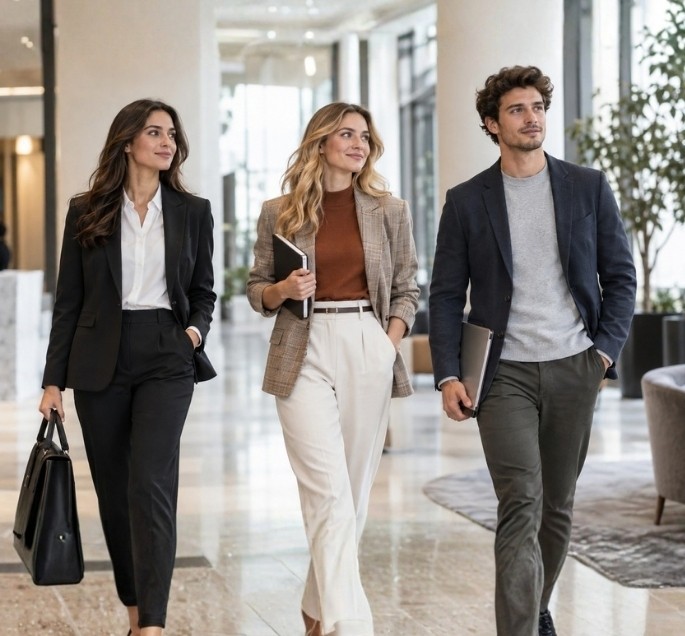
First impressions matter in job interviews, and clothing choice is part of presenting a professional appearance. However, there is no single outfit that works for every job interview. The right choice can vary depending on the position you're applying for, the sector's dress culture, the company's working environment, and the style in which you feel most comfortable.
A well-chosen interview outfit doesn't just create a professional appearance; it also helps you move comfortably throughout the interview. In this guide, we address the question of what to wear to a job interview across different topics, from key selection criteria to sector and seasonal differences, and from face-to-face interviews to online meetings.
Key Principles for Choosing Interview Attire
Regardless of the sector or position you're applying for, there are universal principles that apply to interview outfit selection.
Research the company culture: Before attending the interview, review the company's website, social media accounts, and employee profiles to understand the general dress code. The expectations of a corporate bank and a startup are very different from each other.
Dress one level up: You may consider choosing a look that is slightly more polished than the everyday office style, while remaining appropriate for the company culture. Going to an interview at a place where jeans and t-shirts are the norm wearing a blazer and shirt demonstrates your seriousness.
Cleanliness and grooming come before everything: Even the most expensive suit leaves a poor impression when it's unironed, stained, or creased. Make sure your clothes are clean, pressed, and well-maintained. Check buttons, zips, and stitching.
Comfort and confidence: An outfit that makes you uncomfortable all day will negatively affect your performance, no matter how stylish it is. Choose an outfit you've tried on before, can move freely in, and feel confident wearing.
Interview Outfits for Women
The women's interview wardrobe offers a variety of options that balance elegance and professionalism.
Classic outfit — Blazer + tailored trousers: A navy or dark grey blazer, a white or light blue shirt or blouse, and straight-cut tailored trousers create a classic and easily adaptable combination, particularly for corporate interviews. The blazer fitting well and the shoulder line sitting correctly defines the silhouette.
Skirt outfit — Blazer + midi skirt: Simple skirt styles such as pencil or A-line can be adapted to a professional look with a blazer and blouse. Very short or very tight skirts should be avoided.
Dress option: A simple, single-colour, knee-length dress paired with a structured blazer creates a strong and effortless outfit. Very low-cut, very short, or heavily patterned dresses should be avoided.
Shoes: Closed-toe, low or mid-heeled classic shoes, loafers, or flat ballet pumps are the most suitable options. If heeled shoes are preferred, it is important to choose a height that allows comfortable movement throughout the day; very high heels can both cause discomfort and send an overly dressy message. Shoe colour should complement the outfit; black and nude tones are the most versatile options.
Accessories: Minimal and elegant jewellery (a delicate necklace, small earrings, a simple bracelet), a structured bag (tote or handbag), and a work portfolio if available are sufficient. Very large, jingling, or attention-grabbing accessories should be avoided.
Makeup and hair: Natural and clean makeup, well-groomed and tidy hair complete the professional look. If makeup is preferred, an application that the person feels comfortable with and that is harmonious with the overall appearance can be chosen.
Interview Outfits for Men
Men's interview attire offers a range from suits to smart casual, depending on the position and sector.
Classic suit: A navy, dark grey, or charcoal suit, a white or light blue shirt, a coordinating tie, and leather shoes are the gold standard for corporate sectors. The suit should fit the body well, sleeves should end at the wrist, and trouser length should create a slight break over the shoe.
Tie and shirt: Plain, solid-colour or very finely patterned (micro dot, pinstripe) ties are the safest choices. Cartoon, very bright, or very broadly patterned ties should be avoided. White or light blue shirt choices work with every suit.
Smart casual option: In creative sectors or more relaxed office cultures, chinos or tailored trousers, a solid-colour shirt (with or without a tie), and a blazer may suffice. Dark plain jeans, if well-fitting and paired with a smart top, can be acceptable in some sectors.
Shoes: Oxford, derby, or loafer-style leather shoes are the most classic choices. Shoes must be clean, polished, and well-maintained. Black shoes pair with grey and black suits, while brown shoes complement navy and beige tones. Shoe selection can vary according to the sector's and company's dress culture. Classic styles are a safer choice for corporate interviews, while clean and well-maintained sneaker styles may also be suitable in more relaxed or creative work cultures.
Accessories: A simple watch, a classic belt (matching the shoe colour), and minimalist cufflinks if needed are sufficient. The belt buckle should not be attention-grabbing.
Grooming details: Shaving or beard grooming, nail care, and neat hair are details as important as the outfit itself. Excessive perfume should be avoided; a light and pleasant scent is sufficient.
Dress Guide by Sector
Each sector has its own dress culture. Knowing the codes of the sector you're applying to is important for making the right choice.
Finance, law, and banking: In sectors such as finance, law, and banking, a more classic and corporate dress sense may come to the fore. The expectation for suits, ties, classic shirts, and leather shoes is strong. Dark tones (navy, dark grey, black) should be preferred. Accessory use should be kept to a minimum.
Consulting and corporate: While suits are still the standard, there is room for small personal touches. A subtly patterned tie, a slightly different shirt colour, or a quality watch creates a professional yet not boring look.
Technology and startups: Smart casual is generally sufficient. Well-fitting jeans, a neat shirt or polo neck, and clean trainers can be acceptable. However, adding a blazer for managerial positions increases professionalism.
Advertising, media, and design: Sectors where personal style is expected to stand out. A creative but neat appearance should be the goal. Black monochrome, an interesting accessory, or an unusual colour combination can reflect your style. Even if a creative style is preferred, a clean and well-groomed appearance retains its importance.
Education and public sector: A simple, tidy, and professional appearance can be preferred in job interviews within education and public sector roles. Very flashy or very casual clothing should be avoided. The blazer-shirt-trousers trio is a safe choice.
Retail and service sector: Dressing to match the style of the brand you're applying to demonstrates your sectoral awareness. If you're applying for a store manager position at a luxury brand, choosing an outfit that reflects that brand's aesthetic sensibility is a wise strategy.
The Psychology of Colours: What Message Does Each Colour Send?
Clothing colour carries powerful subconscious messages. The right colour choice supports the impression you want to make.
Navy: Creates a classic, orderly, and professional appearance. The most recommended colour for job interviews. Creates both an authoritative and approachable impression.
Grey: A neutral and easily combinable option. Dark grey conveys strength, while light grey leaves a softer and more approachable effect.
Black: Provides a stronger and more formal appearance. Head-to-toe black can create a cold impression; balancing with a lighter inner piece is important.
White: Creates a clean and simple appearance. The safest option for shirts and blouses. Can be eye-catching when used as a main piece on its own.
Brown and earth tones: Creates a softer and more natural style. A strong choice in more relaxed sectors; however, very light tones can give a casual impression.
Colours to avoid: Neon tones, very bright red, full-body pink or orange, and other attention-grabbing colours can shift the interviewer's focus from your message to your outfit.
Interview Attire by Season
Summer: Choose lightweight fabrics (cotton, linen blend), light-toned shirts, and a light-structured blazer. Very thick fabrics cause sweating and discomfort. Allow time to arrive early at the interview venue and cool down.
Winter: Thick wool or wool-blend suits, long-sleeved shirts, and a quality overcoat or trench coat should be preferred. When entering the interview room, remove your coat and place it neatly on your lap or on the chair.
Spring and autumn: Transitional seasons require a layering strategy. A light blazer, medium-weight shirt, and light trench coat are the most flexible outfit options. Keeping an umbrella or suitable outer garment to hand in changeable weather conditions can help you get through the day more comfortably.
Pre-Interview Final Checklist
Review this checklist before leaving home on the morning of the interview:
Outfit check: Are all pieces clean and pressed? Are there any button, zip, or stitching issues? Any stains or lint? Do the clothes fit correctly? Are belt and shoe colours coordinated?
Grooming check: Is hair neat? Are nails groomed? Is shaving or beard tidy? Is makeup natural and clean? Is perfume light?
Accessory check: Is the bag or portfolio ready? Are watch, jewellery, and belt in place? Have excess accessories been removed? Is the phone on silent mode?
Backup plan: Keeping a spare pair of socks, a small stain-removing wipe, and a lip care product in your bag provides security against last-minute surprises.
What to Wear for an Online Job Interview
With the widespread adoption of hybrid working models, online job interviews are also frequently preferred. Dressing for the screen has different dynamics.
Focus on the top half: The camera generally shows from the waist up, but in unexpected moments (dropping something, needing to stand up), your lower half may also be visible. Even though the camera only shows your upper body, attending the interview in a complete, appropriate outfit helps you move more comfortably in unexpected situations.
Colour and pattern rules: Very finely striped or very small-patterned fabrics can shimmer on screen (moiré effect). Plain, matte colours look best on screen. White shirts can appear too bright on camera; light blue or cream tones give better results.
Background coordination: Your outfit should create contrast with the background. A white shirt in front of a white wall looks washed out, while a navy blazer draws a much clearer silhouette.
Interview Wardrobe at Mall of Istanbul
Preparing for a job interview starts with finding the right clothes. ICSC "Best of the Best" award-winning Mall of Istanbul, with over 470 stores, offers the opportunity to complete all items in your interview wardrobe under one roof.
You can explore pieces suited to the style you've chosen for your interview across Mall of Istanbul's women's and men's clothing, shoe and bag, accessory, and cosmetics category stores all in one place. Completing different pieces of your outfit in the same visit, from blazers and shirts to shoes and bags, can make the pre-interview preparation process easier.
Frequently Asked Questions
What should you wear to a job interview?
Clean, well-groomed clothes that are appropriate for the company's working culture should be preferred for job interviews. Classic pieces such as blazers, shirts, tailored trousers, skirts, or dresses can be considered for corporate interviews, while smart casual outfits may be preferred at companies with a more relaxed working culture.
What colours should be preferred for a job interview?
Easily combinable colours such as navy, grey, black, white, and earth tones are frequently preferred in interview outfits. Bolder colours can be used in complementary pieces or accessories depending on the sector, company culture, and personal style.
How should you dress for an interview in creative sectors?
In creative sectors such as advertising, design, and technology, smart casual outfits may be preferred depending on the company culture. A more distinctive look can be created with well-fitting trousers or jeans, a shirt, blazer, and accessories that reflect personal style. Here too, a clean, well-groomed, and polished appearance is important.
How should shoes be selected for a job interview?
Clean, well-maintained models that allow comfortable movement should be preferred for shoe selection. Classic styles such as loafers, oxfords, or derbies can be considered for corporate interviews, while clean and well-maintained sneaker styles may also be preferred at companies with a more relaxed working culture.
What are the most common outfit mistakes in job interviews?
Choosing an outfit without considering the company culture, dressing too casually or too flashily for the interview setting, opting for unironed or unkempt clothes, and wearing pieces whose comfort hasn't been tested beforehand are the main points to be mindful of before a job interview.