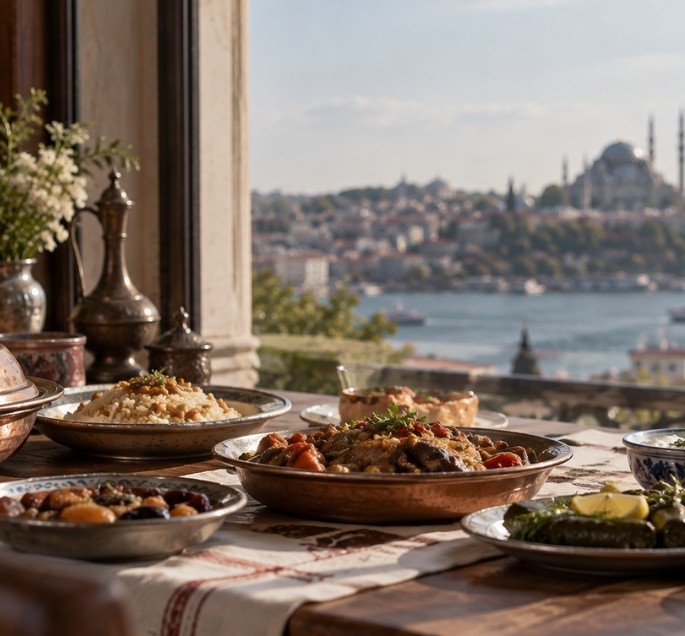
Ottoman cuisine has created a rich culinary heritage by drawing from different geographies and cultures over centuries. This culinary tradition, which sprouted in the fertile lands of Anatolia, has formed a deep-rooted gastronomic culture by blending the palates of a vast geography stretching from the Mediterranean to Central Asia. In this article, we will take a journey into the rich world of Ottoman dishes and get to know one of history's most deep-rooted culinary traditions up close.
Spices and Essential Ingredients
One of the most important elements that form the distinctive character of Ottoman cuisine is the masterful use of spices. While cinnamon added warm depth across a wide range from desserts to meat dishes, cloves were preferred in meat dishes with their intense aroma. Saffron stood out as one of the most valuable spices of the table in terms of both color and flavor. Spices such as coriander, cumin, sumac, and mahlep also formed the indispensable aromas of Ottoman cuisine. Among the ingredients, lamb and beef held an important place, while rice and bulgur formed the basis of many dishes from pilafs to stuffed dishes.
Unforgettable Dishes of the Ottoman Palace
Hünkar beğendi is one of the most well-known dishes of Ottoman cuisine, served with diced meat on a creamy base prepared with roasted eggplant. Mahmudiye is an elegant palace dish prepared by cooking chicken with honey, saffron, and spices. Stuffed melon and lamb tandır are among the special recipes that reflect the creativity of the palace kitchen.
İç pilav, prepared with rice, currants, pine nuts, and cinnamon, is the star of the table. Wedding soup, crowned with a mixture of egg and lemon, is the symbol of special occasions with its velvety texture. Stuffed vine leaves, imam bayıldı, and karnıyarık stand out as the most famous representatives of vegetable dishes.
Ottoman Desserts and Beverages
Baklava is a magnificent dessert prepared with pistachio or walnut filling between thin layers of phyllo dough. While güllaç offers a refreshing taste with milk and rosewater, tavukgöğsü and kazandibi are the finest examples of Ottoman cuisine's creativity. Aşure, a traditional dessert prepared with wheat, legumes, and dried fruits, has become a symbol of the tradition of sharing. Zerde, Turkish delight, keşkül, and various types of helva also hold a special place among Ottoman desserts.
In beverage culture, pomegranate sherbet, rose sherbet, and lemonade were among the drinks served at tables and on special occasions. Boza became an indispensable drink of winter months, while salep, with its content derived from orchid tubers and its warm, creamy texture, became a favorite of cold days.
Table Culture and Its Reflections Today
Ottoman table culture is a way of life in itself, not merely about eating food. The traditional floor table is a reflection of an understanding that prioritizes sharing and togetherness. While hospitality forms the backbone of table culture, Turkish coffee continues to live on today as a ritual that extends post-meal conversation.
The rich breakfast table tradition, meze culture, offering sweets to guests, and serving coffee after meals can be considered among the habits that have reached from the Ottoman era to the present day. Today's chefs are reinterpreting century-old recipes with modern techniques, bringing a contemporary breath to traditional flavors.
In the Footsteps of Ottoman Flavors at Mall of Istanbul
Natolia restaurant, located at Mall of Istanbul, presents Anatolia's rich culinary heritage with a modern approach. Recipes inspired by the Ottoman era are prepared with carefully selected ingredients and served to guests. Ottobite brings together flavors carrying the traces of Ottoman cuisine with traditional helva varieties and a tea time concept in an enjoyable experience. The MOİ Cadde section also offers an ideal area for those who want to enjoy a dining experience in an open-air atmosphere.
Frequently Asked Questions
What are the most well-known dishes of Ottoman cuisine?
Hünkar beğendi, mahmudiye, iç pilav, stuffed vine leaves, imam bayıldı, and karnıyarık can be counted among the most well-known dishes. Among desserts, baklava, güllaç, tavukgöğsü, kazandibi, and aşure stand out.
What are the most commonly used spices in Ottoman cuisine?
Cinnamon, cloves, saffron, coriander, cumin, sumac, and mahlep are among the most commonly used spices.
Where can I taste Ottoman flavors at Mall of Istanbul?
You can discover flavors inspired by Ottoman cuisine at Natolia restaurant located at Mall of Istanbul, and experience traditional helva varieties and the tea time concept at Ottobite.